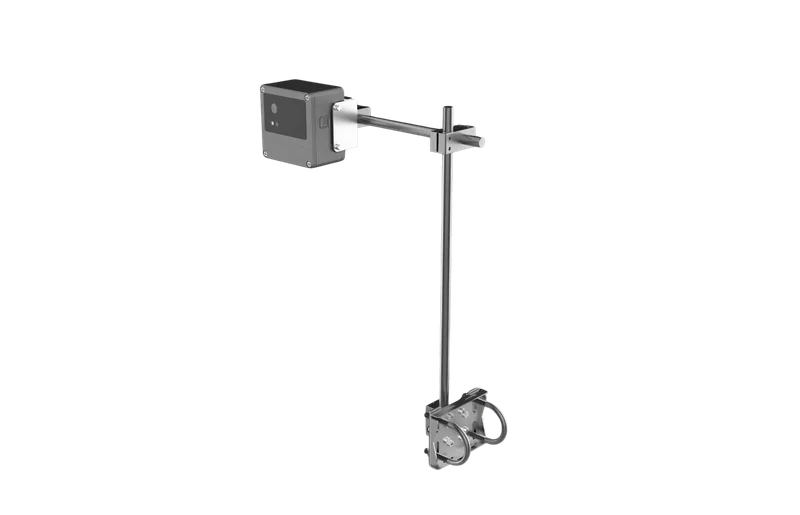
Site cameras record and hope somebody looks. That is the model most builds inherit, and it produces a hard drive full of footage nobody opens until something has gone wrong. ConstructionSense is built on a different idea: the node watches the build, counts and detects on the device, and only interrupts when something needs a person. The rest of the time it is quietly assembling the record you will be asked for later.
Up at kick-off, without site power
A ConstructionSense node goes on the fence, the site shed or a pole before the slab goes down, and it stays there until practical completion. It runs on batteries or solar and reports over 4G, so it goes up on day one rather than waiting on the switchboard, the comms cabinet or a trench across the yard. Where a site does have power and network, we use it.
Everything is buffered locally when coverage drops. Frames wait on the card in the node and backfill in order the moment the link returns, so the sequence stays complete rather than showing a gap on the one day the tower was down. Deployment and support work the way our remote-first model describes: nodes arrive provisioned to the site, are commissioned on a video call, and have their capture schedule, firmware and models changed over the air for the life of the job.
Timelapse that builds itself
Set an interval and the node does the rest. Every minute, every hour or twice a day, for a whole build on one set of batteries, with nobody walking the site with a phone. On most programmes that is a frame every fifteen minutes for the film, faster when a pour is on, and the interval can be changed from the Control Room or remotely by us for every site in a programme at once.
The video assembles itself as frames arrive, so what you show the client today includes this morning. Export any date range as a finished clip. The same capture that proves progress to the client cuts into a launch video or a social edit at handover: one deployment, two budgets.
Every claim comes with a photograph
The reason head contractors ask for this is rarely the timelapse. It is the dated frame for every day of the build, indexed and searchable, with weather logged on the same timeline. When a progress claim is questioned, the answer is a timestamp and a picture rather than a recollection. When a wet-weather delay is contested, the day, the rainfall and the photograph arrive in one export.
The same record covers plant and deliveries. Vehicle and delivery counts at the gate settle “when did that truck arrive” with a timestamp, and idle time on plant you are paying for by the week gives you utilisation data to argue hire costs with.
X-Ray Vision: scrub back to any moment
Every node is also a time machine. Pick a time and see the keyframe from every position alongside the numbers that were live at that second. Flag an incident or a near-miss as it happens and it becomes a permanent, timestamped bookmark on the timeline for the review.
Frames render frosted by default: anonymised silhouettes showing shapes, positions and density without faces or plates. You can see what happened without seeing who it happened to, which is what makes retrospective review usable in a WHS investigation rather than a liability. Keyframe retention is set per site, and the metrics can outlive the imagery.
The site watches itself after dark
After hours, the node detects movement in exclusion zones and raises an alert with the frame attached. A patrol or a monitoring centre gets a verified alert rather than a hunch, which changes what site security costs. Where a route ends at a licensed security provider, they respond; we make sure the alert reached them and log the response against it.
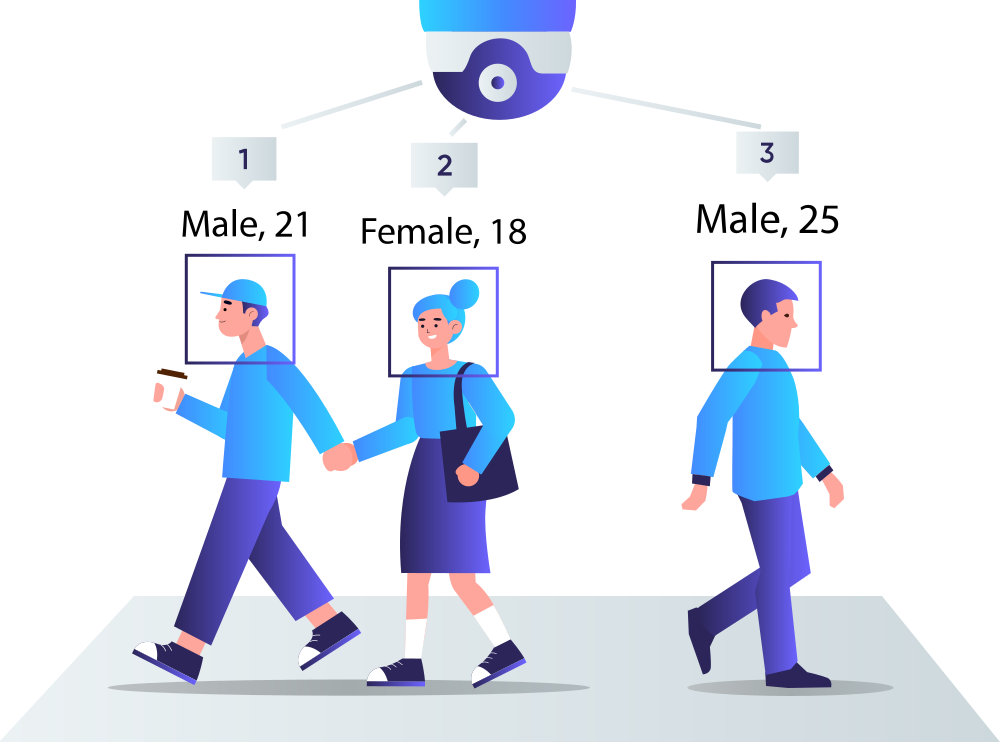
During the day, the gate is counted. Headcount through the day, matched against your induction list, answers the question every principal contractor eventually gets asked. Continuous checks that hi-vis and hard hats are being worn in the areas you nominate, and that plant exclusion zones stay clear, are flagged as they happen. These checks are advisory, never a safety system, and detection is about presence, count and compliance rather than identity.
Who it is for, and how it is priced
Head contractors get progress evidence for claims and a defensible record when a subcontractor dispute lands. Site and project managers see every site from one screen instead of driving between them, and hear about the after-hours movement rather than finding it in the morning. Safety managers get the PPE and exclusion-zone checks and the paper trail regulators expect. Developers and clients watch the asset go up without a visit and receive a handover archive that doubles as launch content.
ConstructionSense is quoted per node per month for the project duration, including connectivity and storage, the same shape as site camera hire. At handover the timelapse, the frame archive and the exports are yours.
Where to read more
The vertical page is at /industries/construction, the recall tools at /platform/vision-nodes/timelapse, and the city-by-city pages with travel priced in start at /construction-timelapse. To price your next site, contact us.