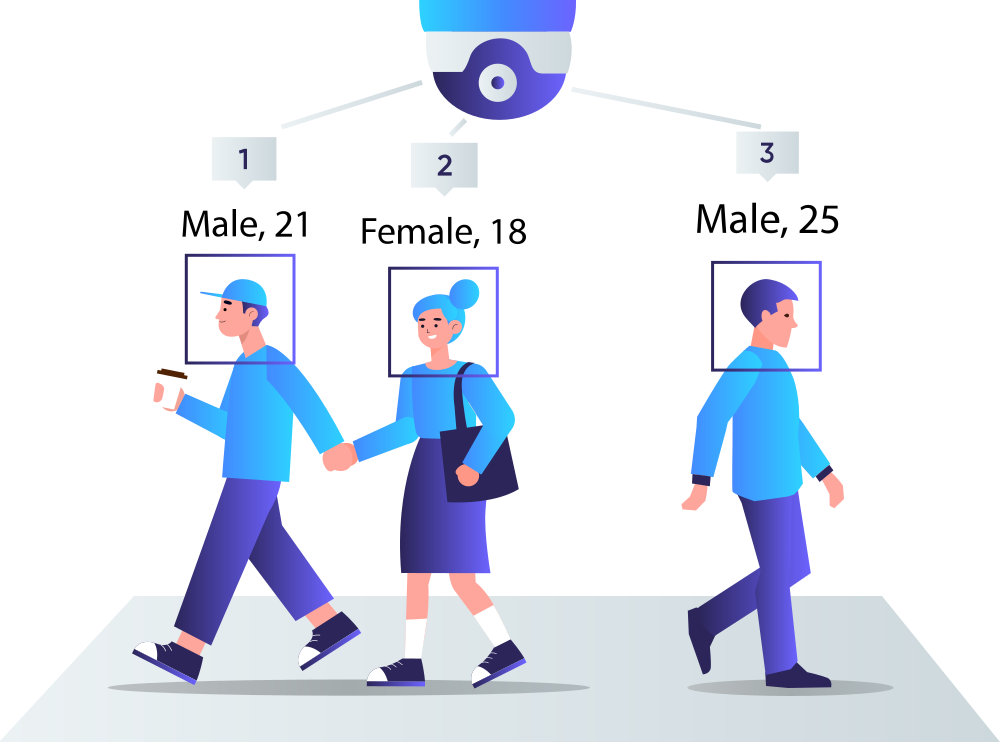
The first question on almost every site walk is the same: do we need cameras here, or not? Our answer is usually “some of both”, and the reasoning behind that is worth setting out, because it is the difference between a deployment that tells you what you needed to know and one that just produces a lot of numbers.
We make two families of sensing hardware. Sense Nodes read the anonymous Bluetooth signals already present in every crowd. Vision Nodes are our own cameras, with the counting done on the device. They answer different questions, and the good deployments use each for what it is best at.
Sense Nodes: the whole site, without a lens
A Sense Node is a compact sensor that reads the anonymous Bluetooth signals devices already broadcast. From that it derives presence, dwell and movement, across a whole site rather than a single doorway. There is no camera in the basic unit and no personal identifier in anything it reports.
Everything is analysed on the node. Only anonymous, aggregate metrics leave the device: no images stored, none transmitted. That makes a Sense Node the easy answer for privacy-sensitive spaces and for anyone who has to justify the deployment to a council or a community.
They are also quick to put up. Tripod, wall or pole mount, then calibrate from the Companion App and draw your zones and counting lines. The housings are weather-resistant, the sensing does not need light, so counts stay steady through rain, glare, darkness and dense crowds, and they run on mains, battery or solar. Add as many as the site needs and they self-organise into one network feeding one dashboard.
Where you need more precision at a particular point, a Sense Node deployment can add camera-based sensing, radar for low-light or privacy-sensitive sites, or the cameras you already own through Vision. The point is that the Bluetooth layer gives you the shape of the whole site, and the other sensors sharpen the places that matter.
Vision Nodes: an answer at a point, on the device
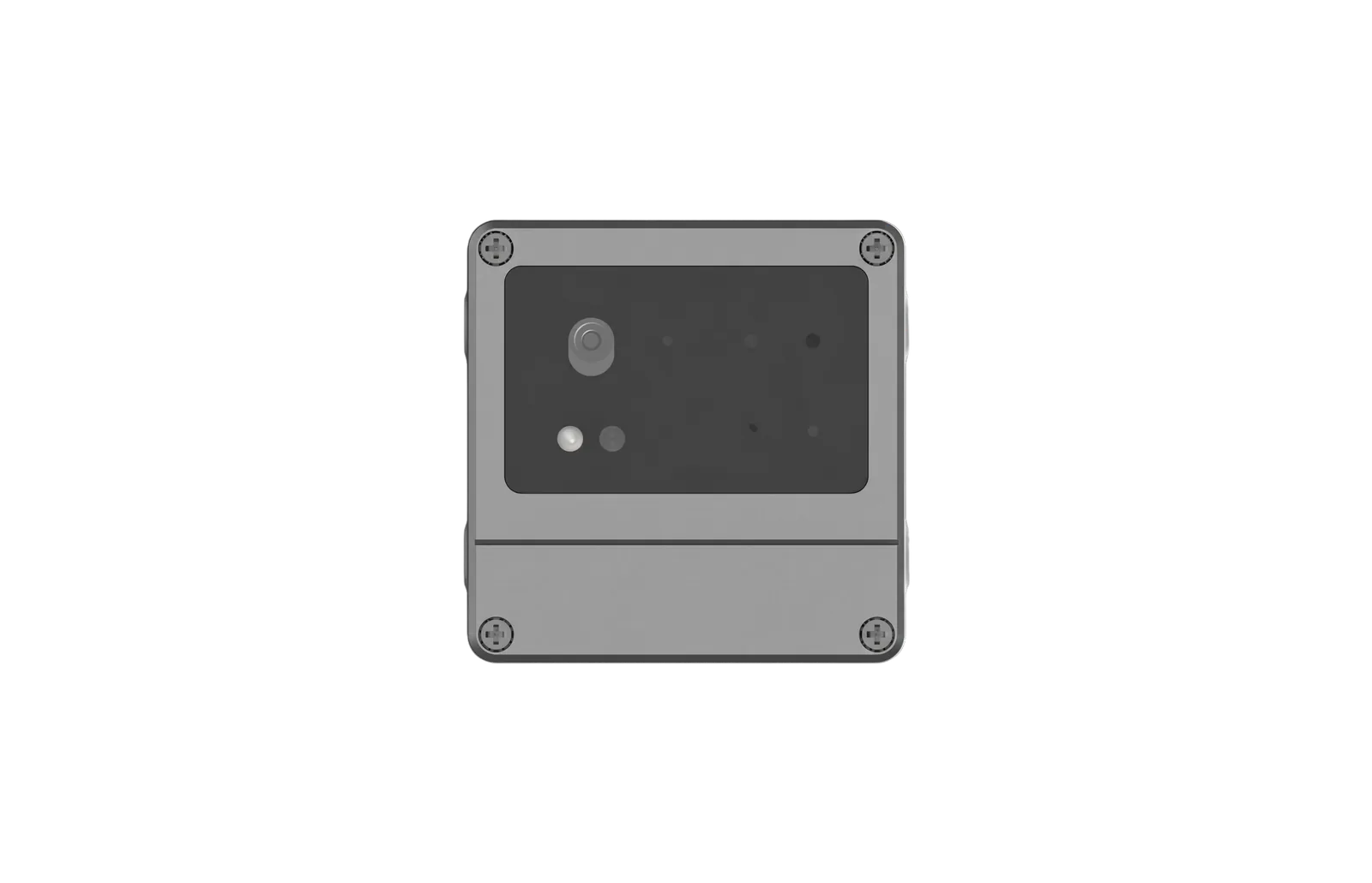
Vision Nodes are cameras that count. Two models share one sealed, IP67 enclosure rated from −20 °C to +50 °C, one mounting system and one dashboard.
The Vision Node 101 is the sensing camera. It wakes on a schedule or a movement trigger, captures, reports and goes back to sleep, and four AA batteries run it for years. It has no neural accelerator; detection on its imagery happens in the platform. It is the node for a far corner that just needs watching, a build that needs a timelapse, or a gauge nobody wants to drive out to read.
The Vision Node 301 adds a dedicated neural accelerator and runs detection on the device at video rate, 720p at 25 frames a second. It ships with an 80-class detector, and you can hot-swap models from the browser. It sends structured events over MQTT and JSON: counts and classes, not video. The Optic Node you will see on our events pages is the 301 in its events configuration, with a 51°, 88° or 137° lens to match the gate, the queue or the whole arena, and pole, wall and desktop mounts in the box.
Both models buffer to a microSD card when the link drops and backfill in order when it returns, and both take firmware and model updates over the air, with rollback.
How we decide
A few rules of thumb carry most of the decision.
If the question is “how many people came through this gate, right now”, that is a 301. A line count at video rate with the answer in the same second is what a neural accelerator is for.
If the question is “where are people spending time across this precinct”, that is Sense Nodes. Dwell and movement across a whole site is a Bluetooth job, and a handful of nodes covers ground that would take a great many cameras.
If the question is “what did this site look like every day for six months”, that is a 101 on batteries, capturing on a schedule.
If there is no power, lean toward Sense Nodes on battery or solar, or a 101. If there is a sightline but nothing to plug into, a 301 will still run on four AA cells, USB-C, PoE or solar, sleeping at near-zero draw between detections.
And if the site already has cameras, we connect those first through Vision and use nodes for the places fixed cameras cannot reach.
Mixing them on one site
The practical shape of most deployments is a Sense Node layer across the site, 301s or Optic Nodes on the gates and pinch points, and 101s wherever something needs a long, patient eye. Counts from every one of them land in the same dashboards, so one screen covers the lot, and the Control Room treats them as one fleet.
Where to read more
The three hardware pages set out each family in full: /platform/sense-nodes, /platform/optic-nodes and /platform/vision-nodes. If you would like us to walk your site plan and suggest a mix, contact us.